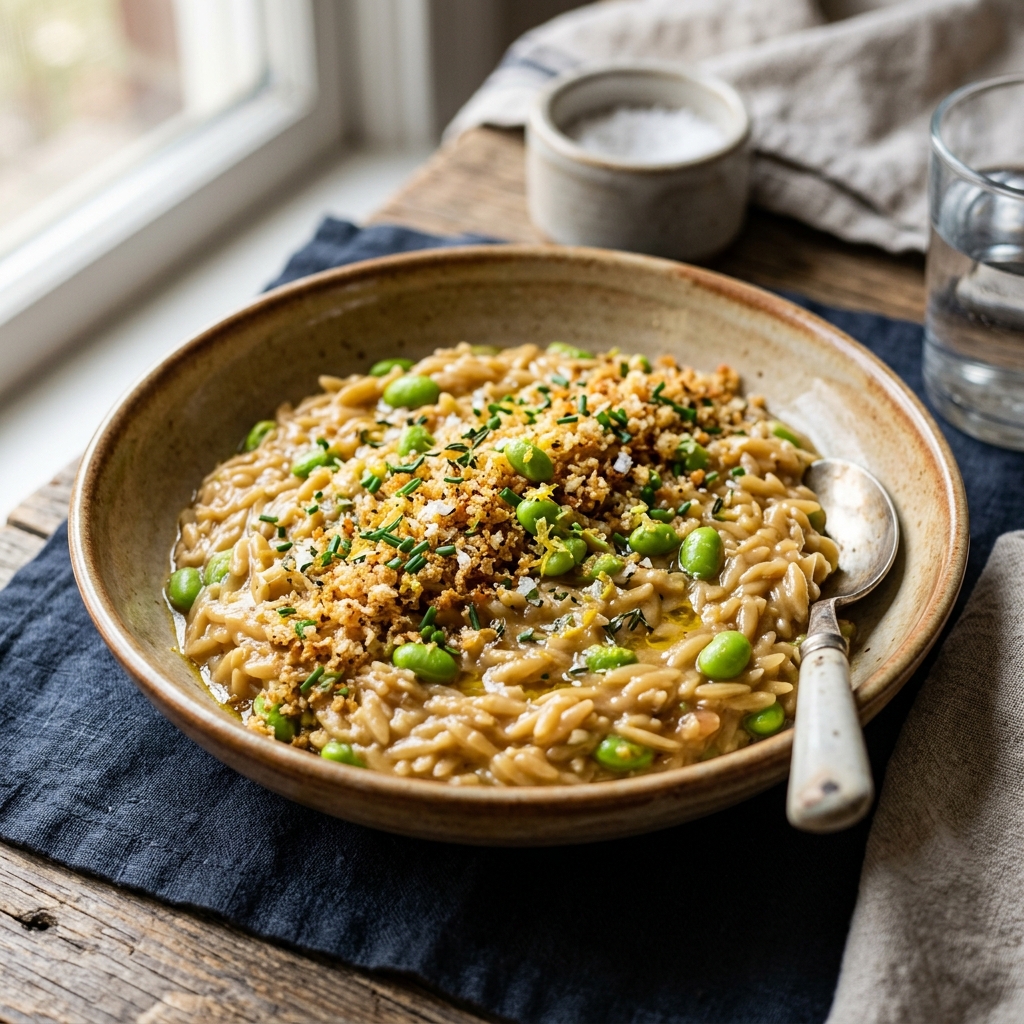
Miso-Butter Edamame Orzotto with Crispy Panko and Lemon
A creamy, risotto-style orzo that blends Japanese pantry depth with Italian comfort cooking. Sweet edamame, savory miso-butter, and a crunchy panko topping make it elegant yet approachable.
Ingredients
- orzo pasta — about 1 1/2 cups280 g
- shelled edamame — fresh or frozen, thawed if frozen180 g
- white miso paste — about 2 tablespoons35 g
- unsalted butter — divided45 g
- olive oil — 1 tablespoon15 ml
- shallot — finely diced, about 1 medium60 g
- garlic — 2 cloves, finely chopped8 g
- dry white wine — optional80 ml
- vegetable stock — kept hot; use low-salt if possible900 ml
- Parmesan cheese — finely grated, plus extra to serve45 g
- lemon zest — from 1 lemon2 g
- lemon juice — 1 tablespoon, or to taste15 ml
- panko breadcrumbs — about 2/3 cup40 g
- toasted sesame seeds — about 1 tablespoon10 g
- spring onions — thinly sliced, for garnish20 g
- black pepper — about 1/2 teaspoon, or to taste1 g
- salt — start small; miso and Parmesan are salty2 g
Nutrition
Nutrition values are estimates and may vary depending on ingredients and brands.
Instructions
- 1Warm the stock and mix the miso
Pour the vegetable stock into a saucepan and keep it hot over low heat. In a small bowl, whisk the miso with 60 ml (4 tablespoons) of the hot stock until smooth, then set aside.
3 minutes Low heatCues: The stock should be steaming lightly but not boiling hard; the miso mixture should look smooth with no lumps.Tip: Dissolving miso separately helps it blend evenly and prevents salty pockets. - 2Make the crispy topping
Heat 10 g butter with the olive oil in a wide sauté pan over medium heat. Add the panko and stir often until evenly golden. Add the sesame seeds for the final 30 seconds, then transfer to a plate.
3 to 4 minutes Medium heatCues: The panko should turn light golden, smell nutty, and feel crisp rather than soft.Tip: Remove it as soon as it is golden; it continues to darken slightly from residual heat. - 3Soften the aromatics
In the same pan, melt 15 g more butter. Add the shallot with a small pinch of salt and cook, stirring, until soft. Add the garlic and cook briefly.
3 minutes for shallot, 30 seconds for garlic Medium-low heatCues: The shallot should look translucent and glossy, and the garlic should smell fragrant without browning.Tip: If the garlic starts to color, lower the heat so it stays sweet rather than bitter. - 4Toast the orzo
Add the orzo to the pan and stir to coat it in the butter. Cook for a short time to lightly toast the pasta.
2 minutes Medium heatCues: The orzo should smell slightly nutty and look a shade more opaque around the edges.Tip: This quick toasting helps the orzo keep its shape while still becoming creamy. - 5Deglaze and begin the orzotto
Pour in the white wine, if using, and stir until most of the liquid has evaporated. Add the hot stock one ladle at a time, stirring frequently and letting each addition absorb before adding the next.
10 to 12 minutes Medium to medium-low heatCues: The pan should look gently simmering; after each addition, the liquid should reduce until the orzo is creamy, not dry.Tip: Keep the orzo moving every 20 to 30 seconds so the starch releases and makes the sauce silky. - 6Add the edamame
When the orzo is nearly tender, stir in the edamame and continue adding stock as needed.
3 minutes Medium-low heatCues: The edamame should turn bright green and be heated through; the orzo should be tender with a slight bite in the center.Tip: If using frozen edamame, thawing first helps keep the pan temperature steady. - 7Finish with miso, butter, and Parmesan
Turn the heat to low. Stir in the dissolved miso, the remaining 20 g butter, Parmesan, lemon zest, lemon juice, and black pepper. Add a splash more hot stock if needed to loosen the texture.
2 minutes Low heatCues: The orzotto should look glossy and flow slowly when spooned; it should smell buttery, savory, and lightly citrusy.Tip: Keep the heat low after adding miso so its delicate sweetness stays rounded and balanced. - 8Taste and serve
Taste and add a little salt only if needed. Spoon into warm bowls and top with the crispy panko, extra Parmesan, and sliced spring onions.
1 minute Warm bowlsCues: The finished dish should be creamy enough to spread softly in the bowl, with a crisp topping added just before serving.Tip: Serve immediately for the best contrast between the creamy orzotto and crunchy topping.
Chef tips
- Use white miso rather than darker miso for a gentler, sweeter flavor that suits butter and Parmesan.
- If the orzotto thickens too much before serving, loosen it with 30 to 60 ml hot stock and stir until glossy again.
- A microplane gives the finest lemon zest, which distributes the citrus aroma evenly.
- For extra green freshness, stir in a small handful of baby spinach at the end until just wilted.
Cooking video
No cooking video available yet.
Cook this dish safely
Follow safe food-handling practices — keep raw and ready-to-eat foods separate, cook applicable foods thoroughly, and refrigerate perishable foods promptly.
Cook chicken, turkey and other poultry to an internal temperature of 165°F / 74°C at the thickest part (a food thermometer is the only reliable way to check). Rinsing raw poultry is not recommended — it splashes bacteria around the sink. Sanitize any cutting boards, knives and hands that touched the raw bird before they touch anything else.
Keep milk, cream, cheese and yogurt at or below 40°F / 4°C. Once served, never leave perishables at room temperature longer than 2 hours (1 hour above 90°F / 32°C). Any leftover dairy-based sauce or custard is safest eaten within 3-4 days.
Use separate cutting boards and utensils for raw animal protein and for anything you'll eat raw (salad, garnish, herbs). Wash hands, knife and board thoroughly with hot soapy water between steps.
Refrigerate any leftovers within 2 hours of cooking, in shallow airtight containers, and eat within 3-4 days. Reheat to steaming hot (165°F / 74°C) before serving. Freeze portions you won't eat in that window.
This list is based on the recipe's ingredients. Cross-contact during preparation or shared kitchens may still introduce allergens — always check individual products.